
For most of the 20th century, the television set was the undisputed centerpiece of the American living room. Families gathered around it. Advertisers built empires on it. Networks wielded it like a cultural sledgehammer. The rules were simple: you watched what was on, when it was on, or you missed it entirely.
That world is gone.
The rise of streaming platforms has done to traditional television what the automobile did to the horse-drawn carriage — not just replaced it, but fundamentally changed the infrastructure, economics, and culture built around it. Understanding how that shift happened, why it was inevitable, and what it means for the future of entertainment is no longer just relevant to media insiders. It matters to anyone who consumes content, invests in media companies, or simply wants to understand how billion-dollar industries collapse and rebuild themselves in real time.
How We Got Here: The Anatomy of a Disruption
The story begins, as most modern disruptions do, with a company that didn’t look threatening at first.
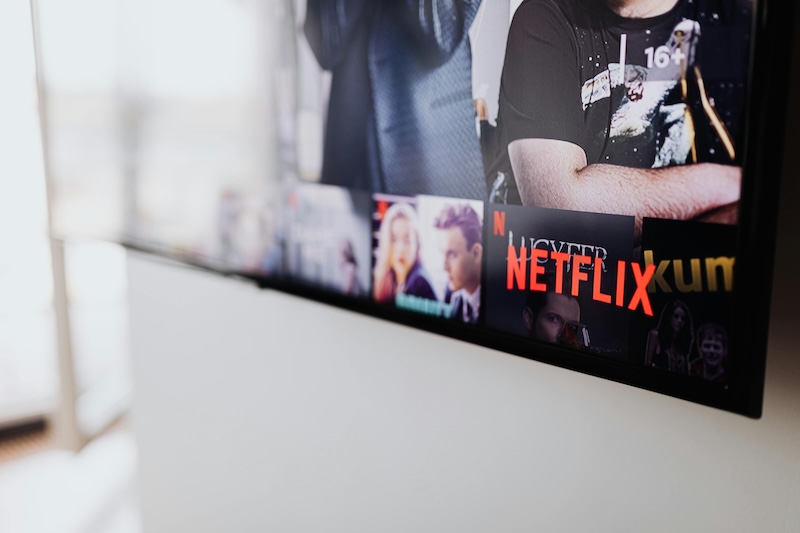
Netflix launched its DVD-by-mail service in 1998, the same year Blockbuster was generating nearly $800 million in late fees alone. For years, the two businesses coexisted — one a brick-and-mortar giant with thousands of locations, the other a niche internet novelty. Then Netflix launched its streaming service in 2007, and everything changed.
The concept was seductively simple: unlimited access to a library of films and TV shows for a flat monthly fee. No late fees. No driving to a store. No scheduled programming. You watched what you wanted, when you wanted, on your own terms.
The idea wasn’t just convenient — it was psychologically transformative. It handed control back to the viewer.
Blockbuster famously declined to purchase Netflix for $50 million in 2000. By 2010, Blockbuster had filed for bankruptcy. Netflix today is worth more than $300 billion.
The Death of the TV Schedule
One of the most overlooked casualties of the streaming era isn’t a company — it’s a concept: the television schedule.
For decades, the schedule was the iron logic of the entertainment industry. Hit shows were slotted in prime time. “Must-see TV” nights kept viewers loyal to specific channels on specific evenings. Advertisers paid premiums for placement during the Super Bowl, season finales, and appointment television events. The entire ecosystem — from ad rates to Nielsen ratings to network negotiations — was built on the premise that audiences would show up at a predetermined time.
Streaming dismantled all of that.
When Netflix began releasing entire seasons of original programming at once — a practice that began with House of Cards in 2013 — it didn’t just change a delivery mechanism. It introduced a new verb into the cultural vocabulary: binge-watching. Viewers no longer consumed television episodically, one week at a time. They consumed it in marathons, on their own schedule, entirely outside the traditional broadcast window.
The ripple effects were profound. Ad-supported television, which had been the financial backbone of the broadcast model for 70 years, suddenly faced a generation of viewers who had never learned to tolerate commercial breaks. DVRs had already begun eroding live ad viewership. Streaming accelerated that erosion into a cliff.
The Streaming Wars: When Everyone Wanted a Throne
Netflix’s early dominance attracted one inevitable consequence: competition.
The late 2010s became the era of the streaming land grab. Disney launched Disney+ in 2019 and amassed over 100 million subscribers in just 16 months — a pace Netflix took seven years to reach. HBO Max arrived. Peacock launched. Paramount+ entered the market. Apple TV+ debuted with a modest library but deep pockets. Amazon doubled down on Prime Video. Each platform declared war on the others, and the weapon of choice was original content.
The resulting spending spree was staggering. Netflix alone spent over $17 billion on content in a single year. Studios that had once sold their libraries to streaming platforms suddenly realized they had been arming the very competitors now threatening them. Disney pulled its content from Netflix. WarnerMedia launched its own platform. The studio system, which had survived television, VHS, DVD, and the internet, found itself scrambling to rebuild its distribution model from scratch.
For consumers, this created an awkward paradox: the streaming revolution had promised simplicity, but by the early 2020s, getting access to all the content you wanted required subscriptions to five or six different services — costing, in many cases, more than a traditional cable package.
The streaming wars hadn’t killed subscription fatigue. They had created it.
The Economics of Streaming: A Model Under Pressure
Here is the uncomfortable truth about the streaming economy: for most of its history, it has been a money-losing enterprise propped up by the assumption of future dominance.
Netflix spent years prioritizing subscriber growth over profitability, betting that scale would eventually produce sustainable margins. Disney+ launched at a deliberately low price point to acquire users quickly, absorbing billions in losses in the process. The logic was venture-capital thinking applied to entertainment: grow fast, worry about monetization later.
Later arrived.
By 2022, Netflix reported its first significant subscriber loss in over a decade. Its stock dropped more than 35% in a single day. Suddenly, Wall Street — which had rewarded the “growth at any cost” model for years — wanted to see a path to profit. The industry pivoted almost overnight.
Platforms introduced ad-supported tiers, reversing one of the core promises of the streaming model. Password-sharing crackdowns became industry-wide policy. Content budgets were scrutinized. Expensive productions were cancelled. Entire platforms merged or shut down. The consolidation that analysts had predicted for years began in earnest.
What emerged is a more sober, more complex landscape than either the utopian “streaming kills cable” narrative or the pessimistic “Netflix is doomed” counternarrative suggested.
What Traditional TV Gets Right (And Why It Still Matters)
It would be a mistake to write the obituary for traditional television entirely.
Live television — sports, news, awards shows, elections — remains remarkably resilient. The Super Bowl still draws over 100 million viewers. Live sports rights have become the most valuable assets in all of media, precisely because they are one of the few remaining forms of truly appointment television. The NFL’s media rights deals, signed in 2021, were valued at more than $100 billion over 11 years. Streaming platforms scrambled to acquire pieces of those rights, not because they had abandoned the streaming model, but because live sports represent something streaming has always struggled to replicate: the shared cultural moment.
There is something irreplaceable about watching an event as it happens, knowing that millions of other people are watching at the same moment. Streaming is excellent at delivering content. It has not yet figured out how to deliver community.
This is why the most interesting trend in the current media landscape isn’t the death of traditional TV — it’s the hybridization of the two models. Streaming platforms are buying live sports rights. Broadcast networks are launching streaming apps. The distinction between “streaming” and “television” is becoming increasingly semantic. What’s really happening is a convergence: the content is the same, the audiences are the same, but the infrastructure and business models are still figuring out how to meet in the middle.
The Viewer in the New Landscape
Amid all the corporate maneuvering, industry consolidation, and financial pressure, it’s worth pausing to ask what this means for the actual human being sitting on the couch.
In many ways, this is the golden age of content. The sheer volume and diversity of programming available today — spanning genres, languages, formats, and cultural perspectives that broadcast television never touched — is genuinely unprecedented. South Korean dramas have become global phenomena. Documentary filmmaking has found mass audiences. Niche interests that would never have supported a network show can sustain entire streaming series.
But abundance has its own costs. The paradox of choice is real. Discovery — finding something worth watching in a sea of infinite options — has become one of the defining frustrations of the streaming era. Recommendation algorithms help, but they also tend to reinforce existing preferences rather than expanding them. The monoculture that traditional television created, for all its limitations, produced shared cultural touchstones: shows that everyone had seen, moments that everyone remembered. Fragmented streaming audiences produce less of that communal experience.
The question isn’t whether streaming is better or worse than traditional television. It’s both, in different ways, depending on what you value in the experience of watching.
Where the Industry Goes From Here
The streaming wars are not over — they have simply entered a new phase. The land grab has given way to consolidation. The content arms race has given way to content curation. The era of “spend anything to grow” has given way to the era of “prove this is a real business.”
A few things seem clear about the road ahead.
Bundling will make a comeback. The cable bundle was imperfect, but it solved a real problem: it gave consumers access to everything they wanted at a predictable price. As streaming fatigue grows, platforms are already beginning to partner and package services together. The wheel, it turns out, is being reinvented as a slightly more technologically sophisticated wheel.
Live content is the last moat. Sports, news, and live events will continue to command premium prices and loyal audiences. The platforms that secure long-term live rights will have structural advantages that purely on-demand competitors cannot easily replicate.
Advertising is back. The dream of an entirely ad-free entertainment landscape has given way to the pragmatic reality that advertising subsidizes content at scale. Ad-supported tiers are growing faster than premium tiers on nearly every major platform. The question is no longer whether streaming will carry ads — it’s how the ad experience will evolve to be less intrusive than the broadcast model it replaced.
International markets will determine winners and losers. Domestic subscriber growth in the United States is largely saturated. The next decade of streaming growth will be fought in Latin America, Southeast Asia, India, and Africa. Platforms that can create locally relevant content at global scale will win. Those that cannot will consolidate or disappear.
The Bigger Picture
The streaming wars are, at their core, a story about what happens when a new technology meets an old industry with enormous amounts of money, entrenched interests, and deeply held assumptions about how things work.
Traditional television isn’t dead — but it has been permanently changed. The networks still exist, but they no longer set the terms of engagement. The studios still produce content, but they no longer control its distribution. The advertisers still spend money, but they no longer dictate when and how audiences gather.
Power has shifted — not entirely to consumers, and not entirely to the new platform giants, but into a more complicated negotiation among all of them. That negotiation is still ongoing.
The most honest thing anyone can say about the future of entertainment is this: the technology will keep changing, the business models will keep adapting, and audiences will keep watching. What they watch, how they watch it, and who profits from it — those questions remain, as they always have in the entertainment industry, genuinely open.